


Key Takeaways
-
Dogs express love through consistent patterns of behavior—not single moments—including soft eye contact, joyful greetings, and choosing to be near you even when nothing exciting is happening.
-
Veterinary behaviorists look at body language, context, and emotional states over weeks to understand canine affection, often backed by research on oxytocin (the love hormone) and brain activity.
-
Not every dog shows love the same way; quiet, independent, or shy dogs can be just as deeply bonded as wiggly, excitable ones.
-
Understanding your dog’s unique “love language” helps you recognize affection you might otherwise miss—and strengthens the bond you already share.
-
Many pet parents find that once they learn to read these signs, they want to capture and honor that connection in meaningful ways.
Dogs don’t say “I love you” with words. They say it with a nudge against your leg, a soft gaze across the room, or that full-body wiggle when you walk through the door.
Veterinary behaviorists—the experts who study canine emotions for a living—don’t rely on single cute moments to understand affection. They look at patterns over time. The way your dog seeks eye contact. How they greet you after work. Whether they choose to sleep in the same room as you, even when the couch in the other room is perfectly comfortable.
What’s beautiful is that every dog shows love differently. Some are all helicopter tail and zoomies. Others are quieter—a gentle lean, a chin resting on your knee. Both count.
How Veterinary Behaviorists Think About “Love” in Dogs
Veterinary behaviorists are certified professionals who specialize in animal behavior, drawing from fields like ethology, neurobiology, and learning theory. Their perspective on canine affection matters because it’s grounded in observable evidence rather than wishful thinking.
When behaviorists talk about “love” in dogs, they’re really describing attachment, preference, and positive emotional states. They look for relaxed body language, approach behavior, and consistent patterns of seeking you out. Behaviorists also observe more facial expressions, such as eyebrow movements, to assess emotional states.
Modern research supports this. Studies have shown that gentle interactions between dogs and their humans trigger the release of oxytocin—sometimes called the love hormone—in both species. Brain scans reveal that dogs’ reward centers light up when they see their owners, similar to how humans respond when they see someone they love.
Here’s the reassuring part: one behavior alone doesn’t “prove” love. Behaviorists evaluate context and consistency over weeks and months. And if you don’t see every sign on this list? That doesn’t mean your dog isn’t bonded to you.
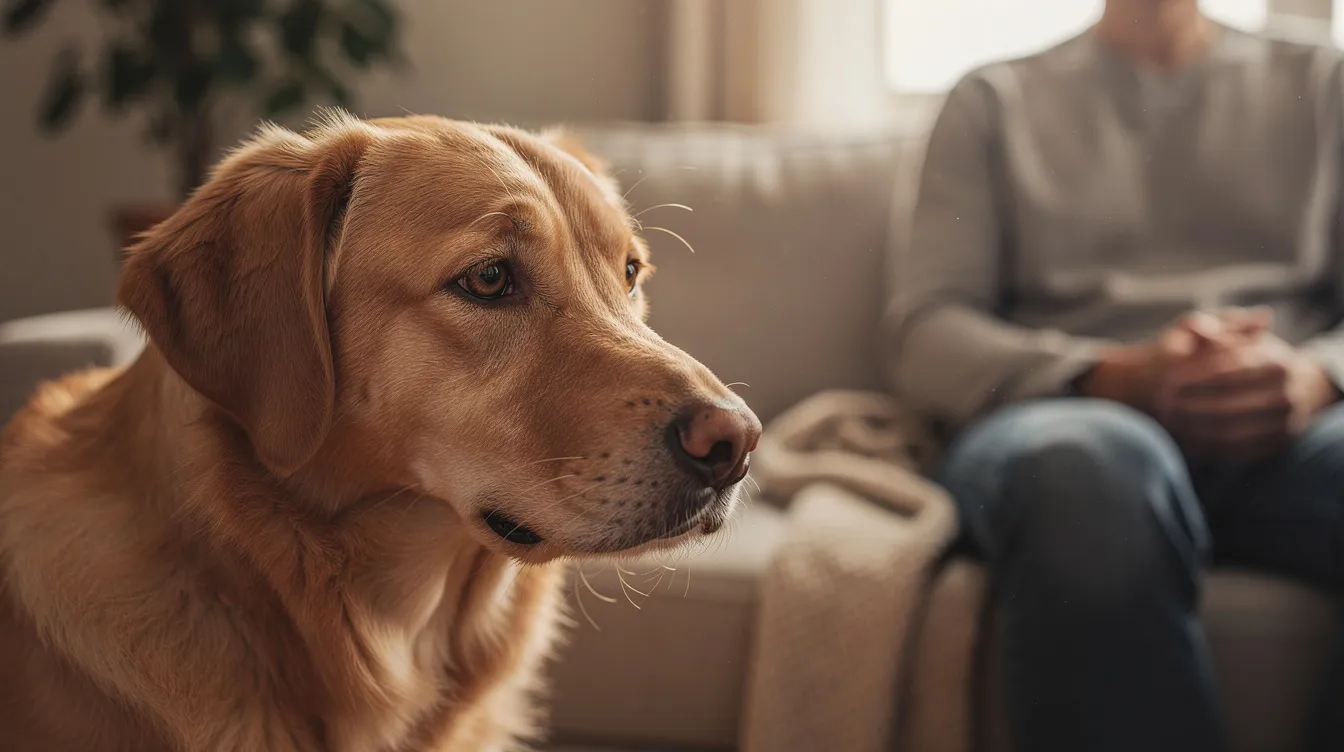
1. Your Dog Seeks Soft Eye Contact With You
Soft eye contact looks like relaxed eyelids, a gentle gaze, and sometimes slow blinks. Dogs may also use their eyebrows, especially by raising their inner eyebrows, as part of their affectionate facial expressions. Raising their inner eyebrows is a deliberate gesture dogs use to communicate emotions like happiness and love, often making their faces appear more expressive and endearing to humans. It’s not a staring contest—it’s a quiet conversation.
Veterinary behaviorists see mutual, relaxed gazing as a key sign of secure attachment. In a landmark 2015 study, researchers found that after just 30 minutes of friendly eye contact, oxytocin levels increased by up to 300% in dogs and 130% in humans. That’s the same bonding mechanism that connects mothers and infants.
To confirm the gaze is affectionate (not anxious), look for other relaxed signals: a loose body, neutral ears, and a soft mouth.
For shy or rescue dogs, love might look different. They may show affection with quick glances and then look away, rather than holding your gaze. That’s still trust building.
2. They Greet You Like You’re the Best Part of Their Day
You know the scene: tail swishing, whole body wiggles, maybe some excited zoomies around the living room. Or your pup trots over with a favorite toy clenched proudly in their mouth.
According to behaviorists, consistently happy reunions after both short and long absences are a hallmark of a strong bond. Research suggests that around 75% of securely bonded dogs show enthusiastic greetings even after brief separations.
It’s worth noting the difference between joyful greetings and signs of distress. Panicked barking, destructive behavior while you’re gone, or frantic pacing may signal separation anxiety rather than simple excitement.
If your dog tends toward overexcitement, a gentle tip: keep greetings low-key to help them settle. But still—feel how special that welcome is.
And if your dog is calm? A content companion who simply walks up for a sniff and a tail wag can be just as loving as one who leaps and dances.
3. Their Tail and Body Language Light Up Around You
Veterinary behaviorists read the whole dog, not just the tail.
A “happy love” posture looks like loose muscles, wiggly hips, a slightly open mouth, and a broad, sweeping tail wag. Some dogs do what’s called a helicopter tail—a full circular wag from the base that says “I’m thrilled to see you.”
But not all wagging means happiness. A stiff posture, tucked tail, or very fast, high, tight tail wags can signal tension or uncertainty. Studies suggest around 60% of owners misread these cues.
Paying close attention to when your dog’s body softens most—during petting, play, or quiet time together—can reveal their personal love language. At the same time, dogs are also paying close attention to your cues and their environment, often using their tail movements to interpret emotions and intentions.
Think about the dog whose whole rear end wiggles whenever their person says their name. That’s not just wagging. That’s joy.
4. They Choose to Be Near You (Even When Nothing Fun Is Happening)
Picture this: you’re working at your desk, no treats in sight, and your dog settles at your feet. Or they follow you from room to room like a gentle shadow.
Veterinary behaviorists interpret this voluntary proximity as a strong sign of attachment. Research from the University of Veterinary Medicine Vienna found that 65% of dogs preferred their owner’s room over a room with toys.
There’s a difference between healthy following and clinginess rooted in anxiety. A content dog can settle if you leave the room. An anxious one may whine, pace, or panic when you’re out of sight.
If your dog leans toward the anxious end, puzzle feeders or mat training can help build independence gently.
And some dogs—especially independent breeds—show their love by checking in regularly, then resting nearby rather than glued to your leg. That’s still love.
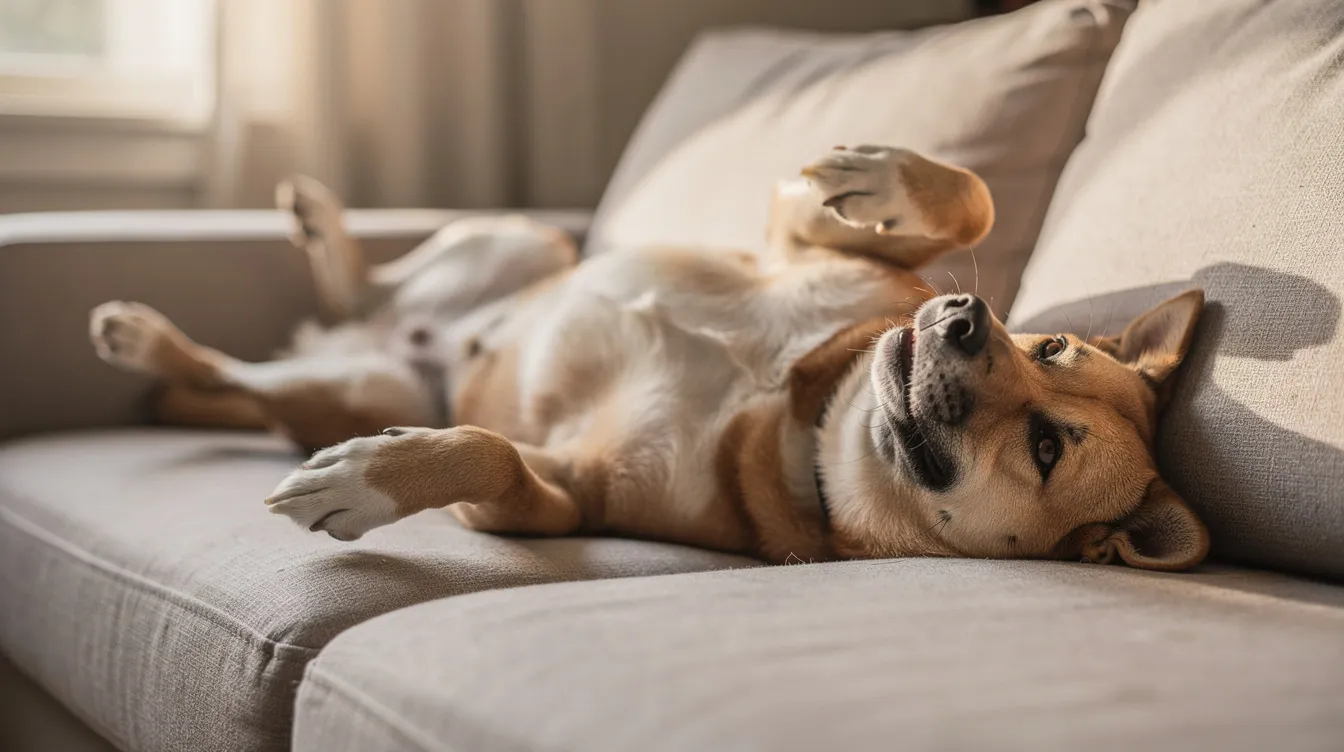
5. They Relax Deeply and Even Expose Their Belly Around You
For an animal descended from pack animals with wild ancestors, exposing a vulnerable belly is a huge vote of trust.
True relaxed belly exposure looks like limp limbs, a soft face, and a gently swishing tail—maybe wiggling for belly rubs. When your dog lays with its belly exposed, it’s a clear sign of trust and comfort, showing it feels completely safe around you. This is different from a tense “submissive” flop where the ears are pinned, the tail is tucked, and the whole body is rigid.
Behaviorists see deep rest in your presence—snoring on the couch next to you, for example—as a reliable sign of feeling safe. Studies show that 80% of dogs choose items with their owner’s scent (like a worn shirt) over clean blankets. They want to feel close, even in sleep.
Not every dog loves belly rubs, though. About 20% prefer chest or shoulder pets. Honor those boundaries—that’s part of love too.
6. They Bring You Their Favorite Toys (or Other “Gifts”)
There’s something heartwarming about a dog proudly trotting over with a slobbery tennis ball or well-loved plush toy.
Behaviorists consider voluntary sharing of prized possessions a strong sign of trust and social bonding. When your dog brings you their favorite toys, they might be inviting you to play—love through shared fun—or simply showing off something precious.
Notice patterns: Does your dog always fetch a toy when they’re happy to see you? Or after you’ve been gone for a while?
When your pup brings you a “gift,” reward it with a little play or kind words. Let them know their offering is appreciated.
7. They Lean, Nudge, or Gently Paw at You for Contact
Some dogs lean their whole body weight into your legs. Others nudge your hand with a wet nose or rest a paw on your arm. Some may also lick you, which is a natural gesture of affection and communication rooted in their puppyhood and social bonding.
Veterinary behaviorists read these as requests for physical contact—like a canine version of asking, “Can we cuddle?”
Context matters. Relaxed facial expressions and loose bodies indicate affection. Tense posture or frantic pawing might signal stress or even pain.
When your dog reaches out and it feels right, respond calmly with petting or kind words. You’re reinforcing that it’s safe to ask for connection.
Some dogs show affection with quieter gestures—like resting their chin on your knee while you watch TV. That counts as a big “I love you” too.
8. They Invite You to Play With Bows and Happy Wiggles
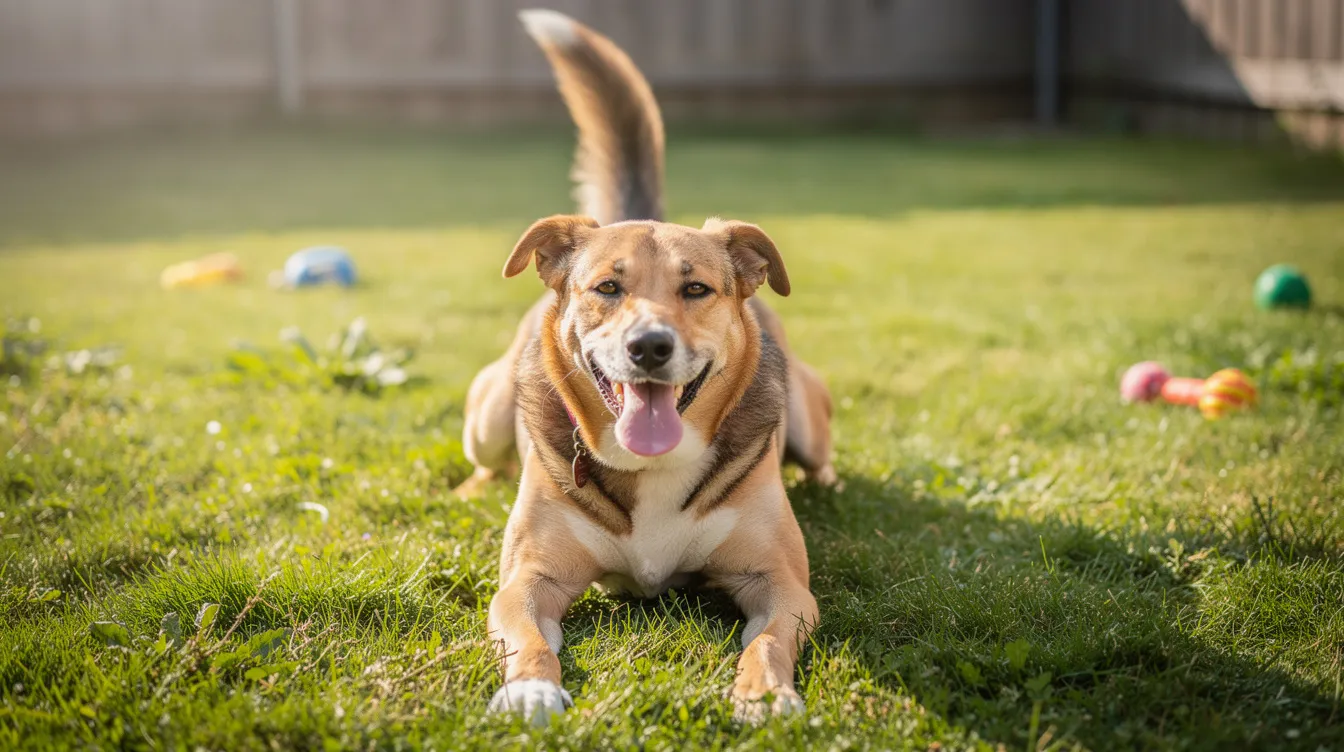
The classic play bow: front legs stretched forward, rear in the air, tail wagging in wide arcs. It’s an unmistakable invitation.
In behaviorist terms, frequent play invitations aimed specifically at you are a strong indicator that your dog enjoys and values your company. Research suggests around 60% of dogs target their favorite person with these invitations.
Play isn’t just fun—it’s how dogs practice social skills and reinforce bonds with their favorite humans.
Different dogs have different play styles: chase games, tug, fetch, or gentle wrestling. Learn what lights your pup up.
One brief note: avoid rough play with anxious or easily overstimulated dogs. Always respect signals that they’re done.
9. They Sleep Near You or Choose Your Scent for Comfort
In the wild, canines sleep close to trusted pack members for warmth and safety. Our dogs carry that instinct.
Common love-sign scenarios include sleeping on your bed, curling against your legs on the couch, or napping beside your chair while you read. Even dogs who don’t share your bed may choose a crate or mat in the same room.
Research shows many dogs prefer their person’s scent on clothing or blankets. Behaviorists interpret this as comfort-seeking—your smell means safety.
Sleep arrangements are personal. A dog can be deeply bonded to you even if they sleep in a separate room or crate. What matters is that sense of connection, not the logistics.
10. They Listen, Respond, and Look to You for Guidance
Notice when your dog turns their head at the sound of your voice. When they come trotting over (most of the time) when called. When they check in visually during a walk, making sure you’re still there. Dogs may also respond emotionally when they hear expressions of love, such as when you say "I love you," which can affect their heart rate and deepen their emotional connection with you.
Behaviorists call this “referencing”—looking to you when uncertain. Studies show dogs look to their trusted humans for reassurance in about 90% of unfamiliar situations. It’s evidence of trust and emotional safety.
Perfect obedience isn’t the point. The key sign of love is that your dog notices you, responds to your voice, and wants to stay connected.
Reward those check-ins with quiet praise. You’re strengthening the instinct to keep the relationship as a safe anchor.
Older dogs or those with hearing and vision changes may show this love differently—by moving closer to you or resting a paw on you instead.
How to Show Your Dog You Love Them Back (In Ways They Understand)
You might wonder: does my dog feel loved? And how do I say it in a way they understand?
Veterinary behaviorists suggest a few things that matter more than fancy gear or expensive treats:
-
Predictable routines. Dogs feel safe when life is consistent. Daily walks, regular feeding times, and familiar rituals reduce the stress hormone cortisol by up to 30%.
-
Gentle training. Positive reinforcement builds trust and strengthens your bond.
-
Quality time. Not just in quantity, but in paying attention. A focused 20-minute walk beats a distracted hour.
-
Choice-based handling. Let your dog approach you. Don’t force cuddles or belly rubs.
These practices help ensure your dog lives their best life, full of happiness, health, and a strong bond with you.
Learn your dog’s preferences. Some furry friends live for long hikes. Others want nothing more than to snuggle on the couch with you all afternoon.
Many pet parents also find themselves wanting to capture these moments—through photos, art, or keepsakes. There’s something meaningful about honoring a bond that brings you both so much joy.
When Love Looks Different: Shy, Senior, and Rescue Dogs
Not every dog is naturally cuddly or exuberant. And that’s okay.
Veterinary behaviorists often work with shy, traumatized, or senior dogs who show love more quietly. They might choose to be in the same room as you without seeking direct contact. They might offer brief nose touches or simply rest nearby—close enough to feel your presence without asking for more.
If you have a rescue, you may have noticed small milestones that feel huge: a formerly fearful dog accepting a gentle pet. A pup who finally takes a treat directly from your hand. An older companion who wants nothing more than to nap with their back pressed against you.
Celebrate these moments. They’re signs of trust, hard-won and precious.
If your dog seems constantly fearful or shut down, consider consulting a vet or certified behavior professional. Feeling safe is the foundation of any loving bond. Sometimes it just takes time, patience, and the right support.
FAQ: Understanding Your Dog’s Love
Does my dog actually love me, or do they just love food and treats?
Veterinary behaviorists look for signs that go beyond food. Does your dog seek you out when there’s no kibble or treat in sight? Do they choose to rest near you? Do they express joy when you come home?
Many dogs will actually delay eating to greet a beloved person first—a clear sign of social attachment that goes deeper than dinner. While treats can strengthen your bond, it’s consistent affection, safety, and routine that create true emotional connection.
Can my dog love more than one person?
Absolutely. Most dogs form secure attachments with multiple humans in a household. Your dog might have different relationships with each family member—one person might be the play buddy, another the cuddle partner, another the walk companion.
Sharing daily care (feeding, walks, training) helps dogs build a rich, multi-person support circle. Love isn’t a limited resource.
What if my dog doesn’t like cuddling—does that mean they don’t love me?
Not at all. Many dogs aren’t naturally cuddly, and this is often about personality or past experiences rather than a lack of affection.
Look for other signs: following you around the house, bringing toys, relaxing in the same room, or lighting up with excitement when you walk through the door.
Respect your dog’s boundaries—no forced hugs—and find other shared activities that feel good to both of you.
How early can a puppy start bonding and showing love?
Puppies begin forming attachments to their humans soon after joining their new home, often around 8-10 weeks of age.
Early love signs include following their person around, whining when you leave the room, and choosing to sleep against a familiar lap or feet. Gentle socialization, predictable routines, and patient handling in those first few months lay the foundation for a lifelong bond.
Can a dog stop loving their person after a bad experience?
While dogs can lose trust or become fearful after repeated negative experiences, they generally don’t “switch off” affection entirely.
Behaviorists focus on rebuilding safety and predictability—calm environments, kind handling, and sometimes professional help. The reassuring truth: research suggests up to 85% of dogs can learn to trust and love again with time, patience, and consistency.
Your dog’s capacity for unconditional love is remarkable. And so is yours.