


Key Takeaways
-
dog sleeping positions, and cats too, can reveal comfort, trust, body heat needs, and emotional state.
-
Most pet sleeping positions are completely normal, including the belly up position, donut position, superman position, and side sleeper.
-
Sudden significant shifts in a pet’s baseline sleep posture can be an early warning sign of stress or pain.
-
dog sleeping habits change as puppies become adult dogs, and again as senior dogs need more joint support.
-
A photo of your furry friend in their favorite position can preserve one of the small moments you may miss most later.
That One Weird Sleep Pose You Never Forget
There is always one sleep pose you can still picture. Your dog snoring belly exposed on a cold surface in July. Your cat curled into a comma at the foot of the bed in 2026. The front paws twitch. The back legs kick. You forget dinner from last Tuesday, but not that.
You do not realize those everyday moments are slipping until they already have. What your pet’s sleep position says is not only cute. It is a small sleep language about whether your dog feels safe, whether your cat feels warm, and whether their body can truly relax.
How Your Pet’s Sleeping Position Becomes Their “Sleep Language”
A pet’s sleeping position provides a direct look into their physical comfort, temperature regulation, and emotional security. Observing a pet’s sleeping position can help ensure they feel secure and maintain the right body temperature.
-
Instinct matters. A tight ball protects vital organs, while a belly exposed pose shows trust.
-
Temperature matters. Dogs often choose sleeping positions that help them regulate their body temperature, such as lying on cool surfaces when they are hot.
-
Sleep stage matters. A dog sleeping lightly may stay alert, while a dog sleeping deeply may twitch, sigh, or stretch out.
-
Place matters. Notice the sofa, crate, dog bed, human bed, sunny patch, or tile.
-
Cats have their own signs too: paws tucked in a loaf, limbs extended in a sprawl, or curled tight for warmth.
The Most Common Dog Sleeping Positions (And What They Usually Mean)
Different dog sleeping positions can tell you what feels safe, warm, cool, or comfortable. Most are perfectly normal unless the pattern changes quickly.
The Side Sleeper
This common sleeping position is when dogs lie on one side with legs extended or legs stretched out, often taking over the whole bed. Dogs that sleep on their side with their legs extended are typically relaxed and feel safe in their environment, indicating they are comfortable and likely to experience deep sleep.
When dogs sleep on their side, it indicates they feel relaxed and safe in their environment, allowing for deep sleep and muscle relaxation. If this position means comfort for your dog, a sudden refusal to use it, or whining while standing, can point to sore joints or muscles.
The Curled-Up Donut
The donut position looks like nose to tail, limbs tucked close, paws under the chest, and sometimes a tail over the nose. Dogs that curl up in a tight ball while sleeping may be doing so to conserve body heat, especially in colder environments.
Dogs that curl up in a tight ball while sleeping, known as the donut position, often do so to conserve heat and protect their vital organs, reflecting a need for security. If a pet that normally sprawls suddenly curls up tightly, it may indicate changes in their emotional or health status.
The Lion Pose or Sphinx
The lion’s pose, also called the Sphinx position, is chest down with front legs forward or front legs tucked, head resting on paws or held slightly up. The Sphinx position indicates an alert state, meaning the pet is ready to spring into action while resting their muscles.
The lion's pose, where dogs rest with their head on their paws, suggests they are resting but remain alert, much like a Sphinx. Dogs in this position can get up or move at a moment's notice if needed.
The Superman Sploot
The superman pose is belly down, front legs stretched forward, back legs stretched behind, like a tiny superhero after a play session. The superman position, where dogs lie on their stomachs with limbs extended, indicates they are tired but ready to play, often seen in energetic puppies.
This popular position also helps a dog press their belly to the floor. After fetch, offer cold water, shade, and maybe a frozen treat if your vet says treats fit their diet.
The Belly Up Position
A dog on their back, paws in the air, tongue out, belly exposed, is hard not to love. When dogs sleep in the belly-up position, exposing their stomachs, it indicates a high level of trust and comfort in their environment, as this is a vulnerable position.
Dogs that sleep belly-up with their legs in the air are showing profound trust and comfort, as this position exposes their vulnerable areas. When dogs sleep on their backs with their bellies exposed, it can indicate they are trying to cool down, as this position allows for maximum air circulation.
Back-to-Back Cuddler
The Back-to-Back Snuggler position is a strong display of love, affection, and comfort, stemming from pack instincts. A dog may press their spine into your legs, another pet, or other pets in the home.
Dogs love this kind of quiet contact because it says, “you are safe.” In multi pet homes, this cuddle can be a sign that trust is growing.
The Burrower Under Blankets
The burrower position is the pet who vanishes under blankets, laundry, or your pillow. The Burrower position reveals a desire for extra comfort and security, mimicking a den-like environment.
Small dogs and certain breeds like Dachshunds often dogs prefer this pressure and warmth. Just make sure they can breathe easily under soft, breathable covers.
On a Cold Surface
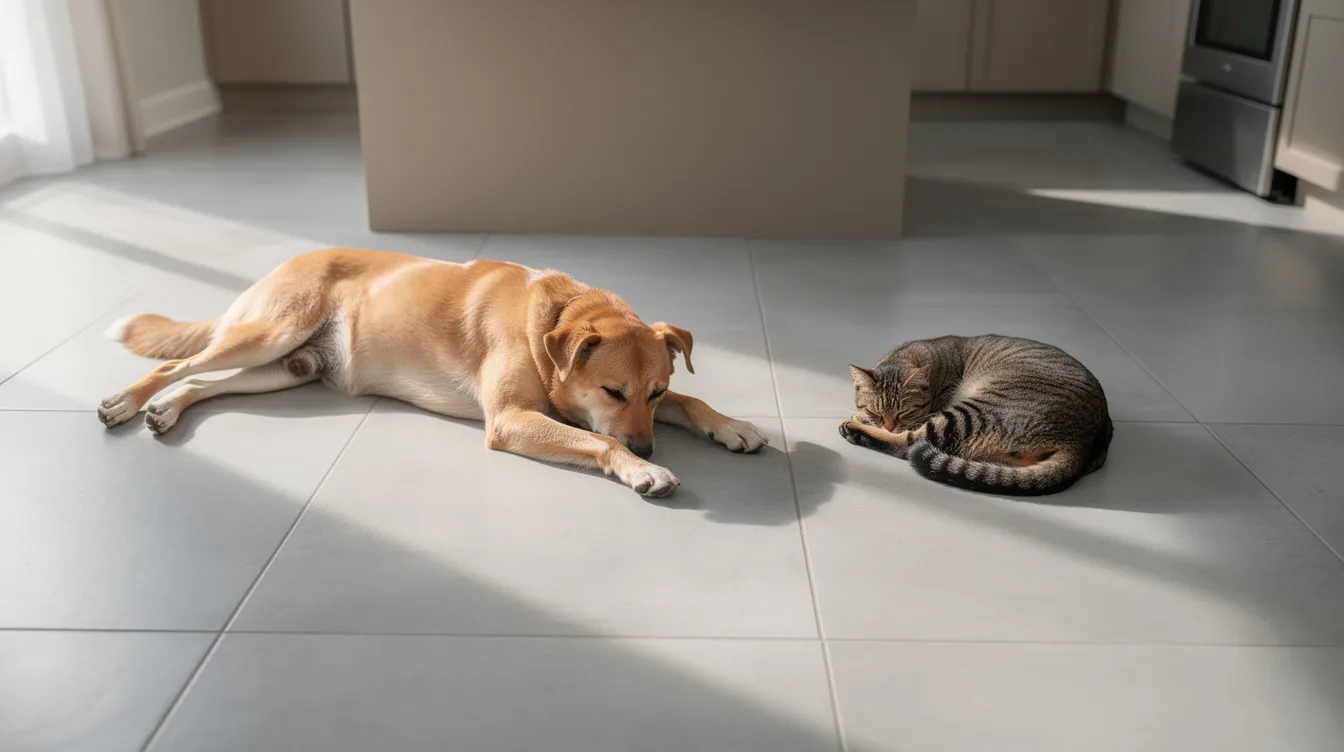
A dog sprawled on tile by the door is often managing heat. Dogs often choose sleeping positions that help them regulate their body temperature, such as lying on cool surfaces when they are hot.
A cooling mat, fan, brushed coat, and cooler room can help. Soft beds trap warmth, so some dogs prefer tile in summer.
Head and Neck Raised
Some dogs simply like a pillow. But a dog sleeping with neck raised on a sofa arm or bed edge may be helping airflow.
Watch for noisy breathing, fast breathing at rest, or waking anxious, especially in Bulldogs, Pugs, and other flat faced breeds. New reliance on this comfortable sleeping position deserves veterinary advice.
Dog Sleeping Habits Across Puppies, Adults, and Seniors
Dog sleeping habits shift with age. According to veterinary sources like PetMD’s guide to dog sleep, puppies may sleep close to 20 hours daily, while many adult dogs rest about 12 to 14 hours.
Puppies and High-Energy Sleep Poses
Puppies crash anywhere. One minute they are chewing a toy. The next they are in a superman sploot with legs stretched, or side sleeping with a toy still in their mouth.
This is normal growth and learning. If a puppy wakes limp, vomits repeatedly, or refuses food, call your vet.
Adult Dogs and Settled Patterns
By age two or three, most adult dogs have favorite sleeping habits. Confident adult dogs may choose belly up or side sleeper poses. Sensitive dogs may curl or burrow.
Small changes help: a quiet corner, less late play, and a dog bed that fits how they stretch.
Seniors and Joint-Friendly Positions
Senior dogs and older dogs often sleep more, but in shorter chunks. Frequent restlessness in pets may indicate chronic pain, particularly in senior pets with arthritis.
As dogs age, they may trade belly up positions for side sleeping with legs loosely bent. Some choose to sleep downstairs because stairs hurt. A lower bed, thicker padding, and non slip rugs can protect their well being.
What Your Pet’s Sleep Position Can Say About Their Emotions
Open poses usually say trust. Tight poses often say caution, cold, or discomfort. A newly adopted dog may start in a tight donut, then move toward side sleeping as the home begins to feel safe.
Confidence vs Caution in Sleep
A confident dog may sleep belly up in the middle of the room. A cautious dog may face the doorway in lion pose, ready for quick movement at a moment’s notice.
Sudden significant shifts in a pet’s baseline sleep posture can be an early warning sign of stress or pain. Changes in a pet’s sleeping posture can serve as early warnings for hidden health issues.
Attachment, Closeness, and “Velcro” Pets
Some pets need contact. A paw on your ankle. A cat sitting upright beside your pillow. A dog pressed against your back.
That closeness can be healthy bonding. It is also okay to use a nearby bed if your own sleep suffers.
When Your Pet’s Sleeping Position Might Signal a Health Concern
Most pet owners do not need to worry about every position. Still, paying attention helps because health problems and health issues can show up first at night.
Breathing, Snoring, and Head Position
Call a vet promptly for labored breathing, blue tinged gums, gasping, or full body shaking where your pet does not wake normally. If snoring is new, loud, or paired with a head propped high, take a short phone video for the vet.
Pain, Joints, and Position Changes
Dogs protect sore areas. They may avoid one side, get up often, or stop jumping onto the couch.
Do not feel guilty if you missed early clues. Many people only see the pattern later, especially with quiet pets.
Turning Those Sleep Positions Into Memories You Can Keep
Notice the pose that feels most like them. A husky in a perfect donut. A senior Lab snoring on the couch. A cat with paws tucked in the same sunny spot every afternoon.
Take the photo. Save the year. If that one sleep photo already feels like a memory, some pet parents turn it into a hand-illustrated portrait of their dog or cat, made by a real artist as gallery-quality wall art.
From Nightly Routine to Art on the Wall
Think of one season. The winter she slept at the base of the bed. The summer he melted onto tile after every walk.
Those are not fancy memories. They are the honest ones.
FAQ: Your Questions About Pet Sleep Positions Answered
Is it okay if my dog or cat sleeps in bed with me every night?
For healthy people and healthy pets, shared sleep is usually fine if everyone rests well. If allergies, light sleep, or immune concerns are an issue, a nearby dog bed is also loving.
Why does my dog keep changing sleeping positions all night long?
Switching from side sleeper to donut to belly up can help with heat, pressure, and household sounds. Constant pacing, panting, or repeated outdoor requests can suggest discomfort or illness.
How can I make my pet’s sleeping area more comfortable?
Creating a cozy sleeping spot for your dog is essential for their well-being, which includes choosing a bed that suits their size and sleeping habits. It’s important to place your dog’s bed in a quiet, safe area away from high foot traffic to reduce disturbances and promote a sense of security.
Using soft, breathable materials for your dog’s bed can enhance their comfort and help them sleep better. Sprawlers need space. Donut sleepers often like bolsters.
Should I wake my dog if they are twitching or barking in sleep?
Soft barking, twitching paws, and dream running are usually normal deep sleep. If movements are violent or your dog wakes confused, film it and ask your vet.
Do pets dream about their people?
We cannot ask them, but many sleep researchers believe dogs and cats replay daily experiences. Maybe that twitch is a walk, a toy, or the quiet sound of you breathing nearby.
Letting Tonight’s Sleep Pose Stay With You
Tonight, notice how your dog or cat is sleeping before you turn out the light. If there is a photo of that favorite pose that already feels like a memory in the making, you can see options for something made specifically for your pet.
The small, sleepy moments are often the ones people miss most later.